
Parrots: A world of colour and chatter
Welcome to the fascinating world of parrots! On this page, we'll explore amazing facts about these vibrant birds, their diverse habitats, and captivating behaviours. Get ready to learn all about parrots with a map of their global residences and stunning visuals. We're just learning all about parrots on this page, so join us on this exciting adventure!
Physical characteristics and anatomy
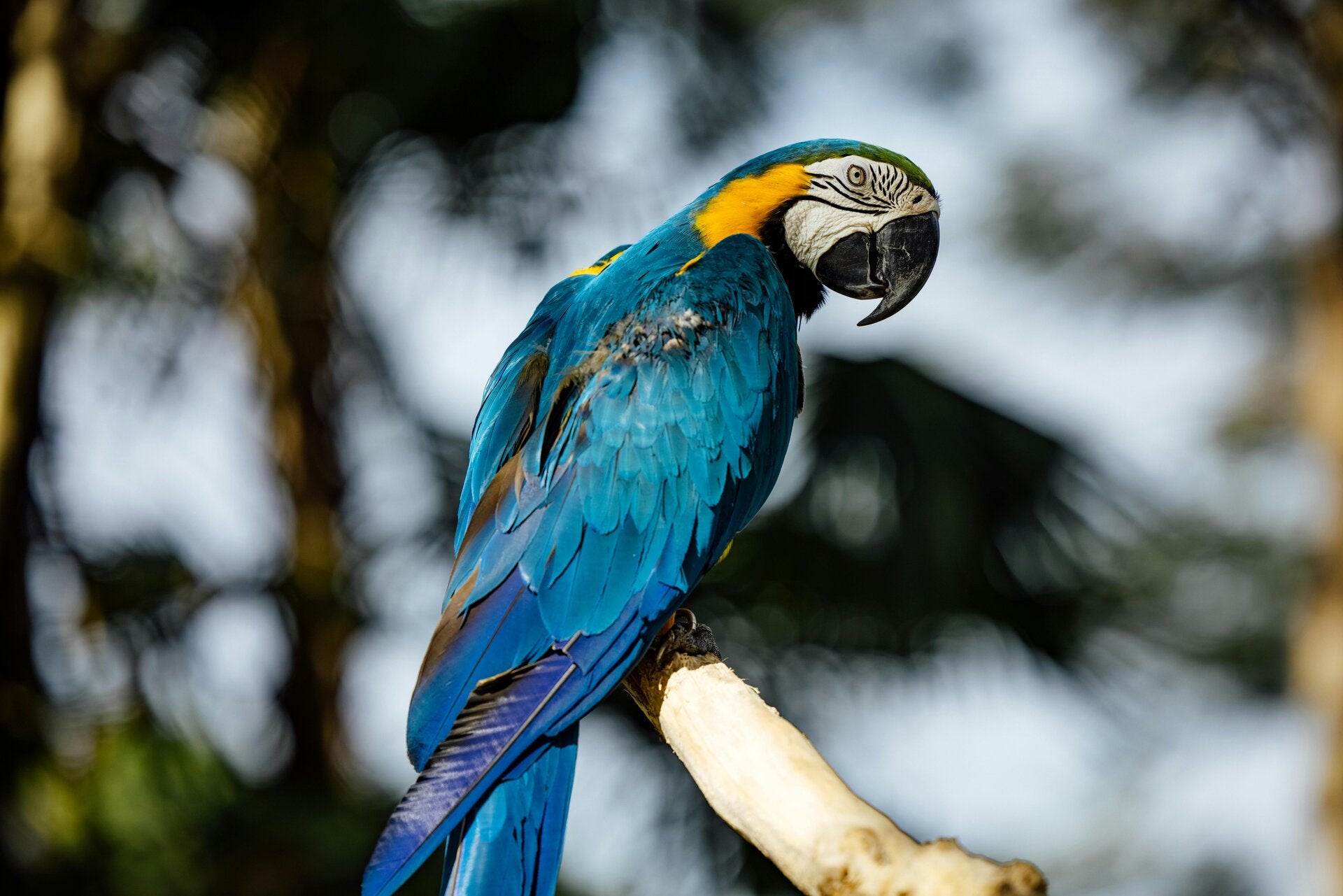
Parrots, scientifically known as psittacines, are a diverse group of birds with a strong, curved beak, upright posture, and zygodactyl feet, meaning they have two toes pointing forward and two backward, which helps them grip branches and manipulate objects.
Parrots are known for their vibrant plumage, which can include bright reds, blues, greens, yellows, and combinations thereof. Feather colouration often serves as camouflage in dense forests or as a social signal within flocks. Sizes range dramatically, from the tiny buff-faced pygmy parrot, which are around 8 cm long, to the large hyacinth macaw (a species that is a deep blue colour), which can reach up to 1 meter in length.
Weights of species of parrots
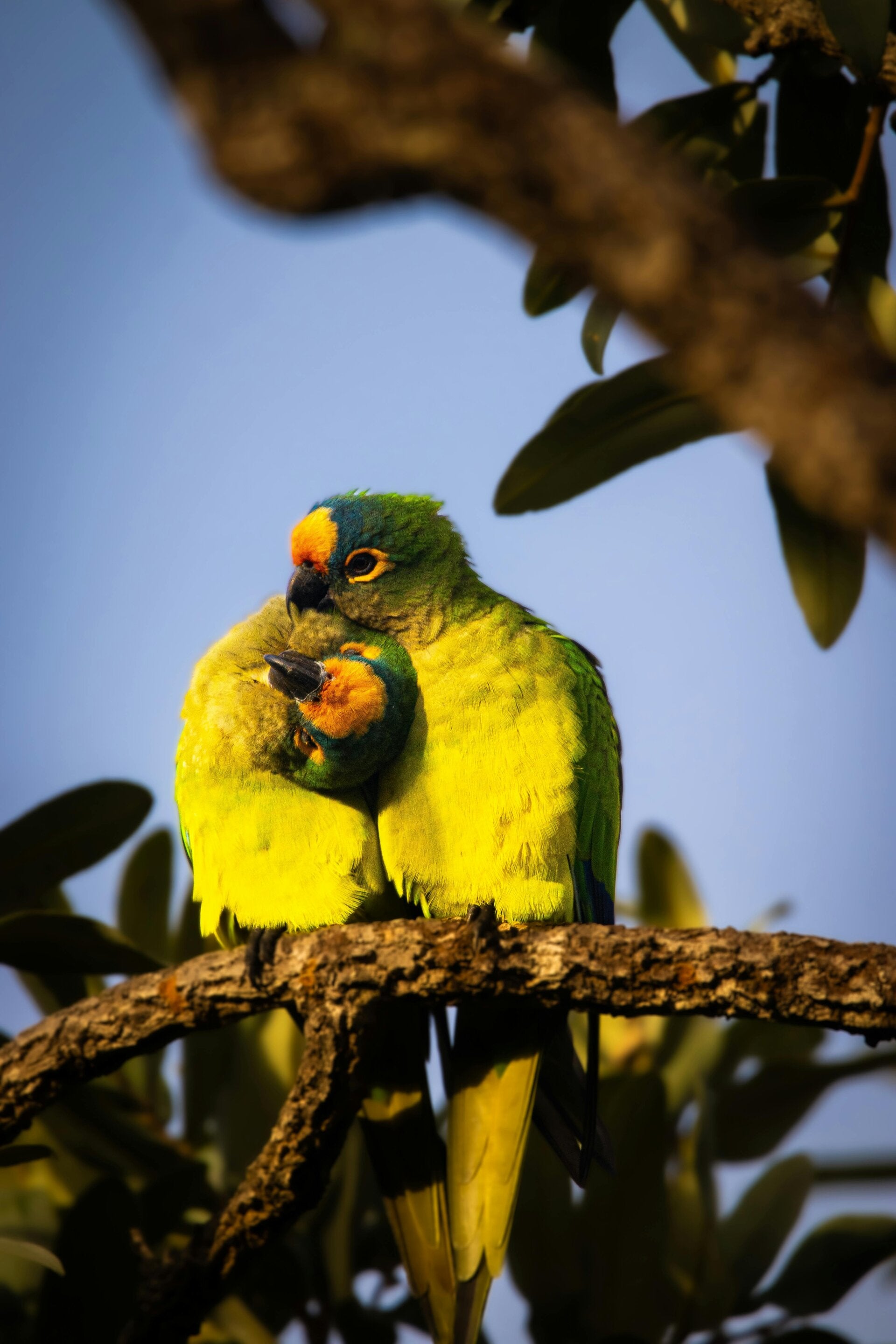
Weights of these exotic birds can range depending on the species. Here are a list of them.
Buff-faced Pygmy parrot: 10-15 grams
Lovebird: 40-70 grams
African Grey Parrot: 400-600 grams
Amazon Parrot: 400-600 grams
Macaw: 900 grams
Kea: 700-1000 grams

Behaviour and communication
Behaviourally, parrots exhibit high levels of social interaction. They often form large flocks and engage in cooperative activities such as communal roosting, coordinated foraging, and vocal communication. Many species are monogamous and form long-term pair bonds. They are highly intelligent, capable of problem solving using tools, and, in some cases, mimicking human speech and other sounds remarkably well.

Diet and hunting
Parrots are mainly herbivorous birds that eat fruits, seeds, nuts, flowers, nectar, and occasionally insects, using their strong curved beaks and zygodactyl feet to handle food, with some species like the Kea occasionally eating meat; they display complex foraging behaviours, use flocking alarm calls, and camouflage to evade predators, and play important roles in seed dispersal and pollination, while in captivity they require a balanced diet of high-quality pellets, fresh vegetables, fruits, nuts, grains, occasional legumes, and enrichment activities to mimic natural foraging and maintain mental and physical health, avoiding toxic foods such as chocolate, avocado, and caffeine.

Parrot activity
Explore fun and engaging activities related to parrots! Parrot-themed drawing tutorials are available to not only deepen your drawing skills, but to also know the body features of our feathery friends!

Create Your Own Website With Webador