
Ibex
Welcome to the lands of Ibex! The ibex is a fearless mountain wanderer, a creature of impossible cliffs and roaring winds, known for its sweeping horns and its uncanny ability to dance along sheer rock faces as if gravity were only a suggestion.
Read on to learn more!
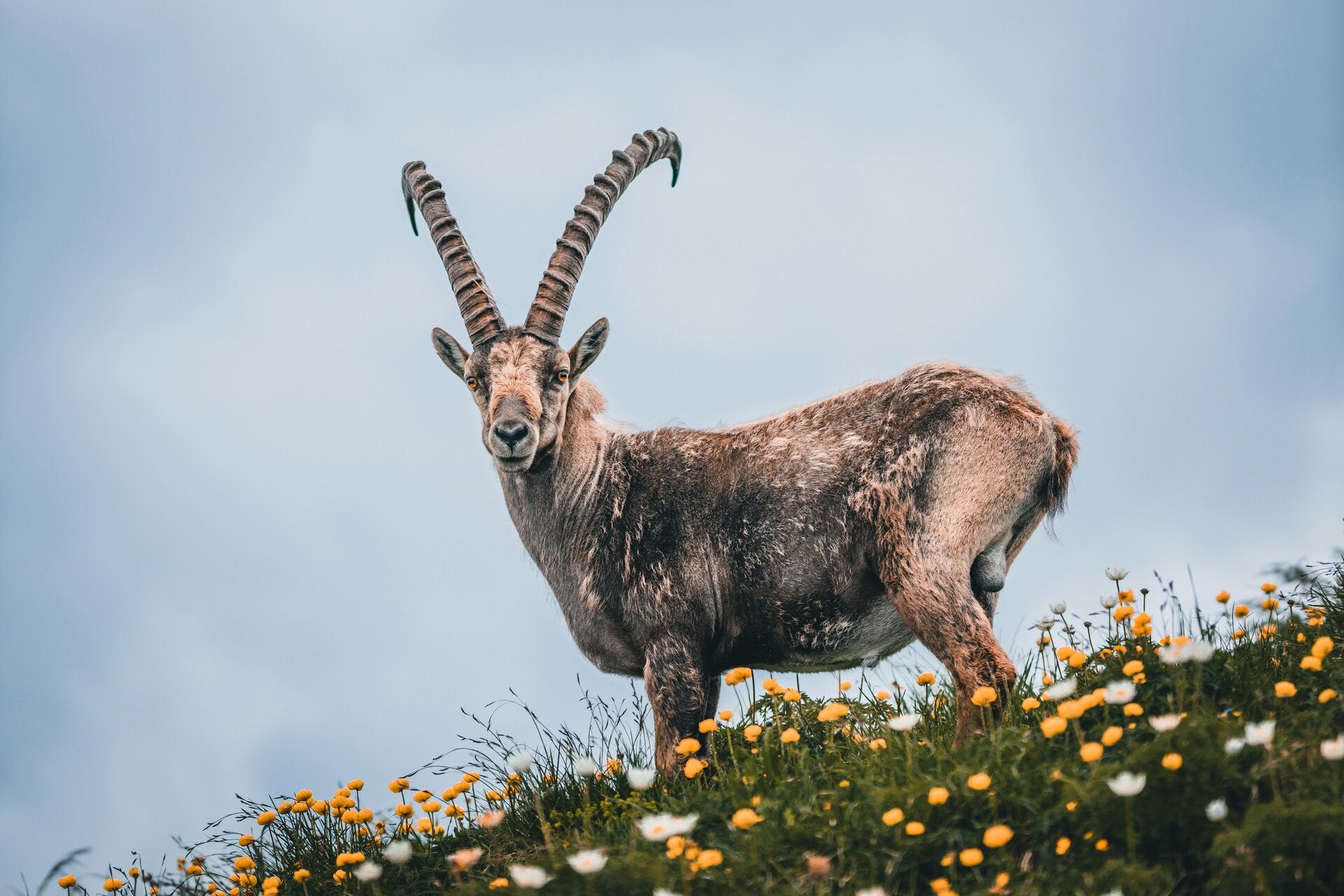
Physical Characteristics
Ibex are robust, muscular goats known for their large, backward curving horns, particularly in males, which can reach up to 150 cm in species like the Siberian ibex. Females have shorter, thinner horns that grow more slow. The body size varies among species, with males generally larger than females. For example, adult male Alpine ibex weigh 75–100 kg and stand about 95 - 110 cm at shoulder, while females are approximately half as heavy. Coats vary with species and environment, ranging from brown to gray, with seasonal adaptions like thicker fur in winter.

Species Overview
There are six commonly recognized ibex species:
- Alpine Ibex (Capra ibex): Found in the European Alps, strong climbers on steep cliffs
- Nubian Ibex (Capra nubiana): Native to northeast Africa and the Arabian Peninsula, adapted to arid, desert mountains.
- Spanish/Iberian Ibex (Capra pyrenaica): Found in Spain, Portugal, and the French Pyrenees; two subspecies are extinct .
- Siberian/Asiatic Ibex (Capra sibirica): In Central Asia and northwester--n Himalayas, one of the largest ibex species.
- Walia/Ethiopian Ibex (Capra walie): Endemic to Simien Mountains, Ethiopia, critically endangered .
- Wild Goat/Bezoar Ibex (Capra aegagrus): Found across western and central Asia; ancestor of domestic goats .
Create Your Own Website With Webador