
Unveiling the golden menace
Embark on a journey into the captivating world of the Golden Poison Frog, a creature of striking beauty and potent toxicity. This page delves into the fascinating biology, ecology, and conservation of *Phyllobates terribilis*, offering insights for researchers and enthusiasts alike. Prepare to be amazed by the secrets held within its vibrant skin.

Physical Characteristics
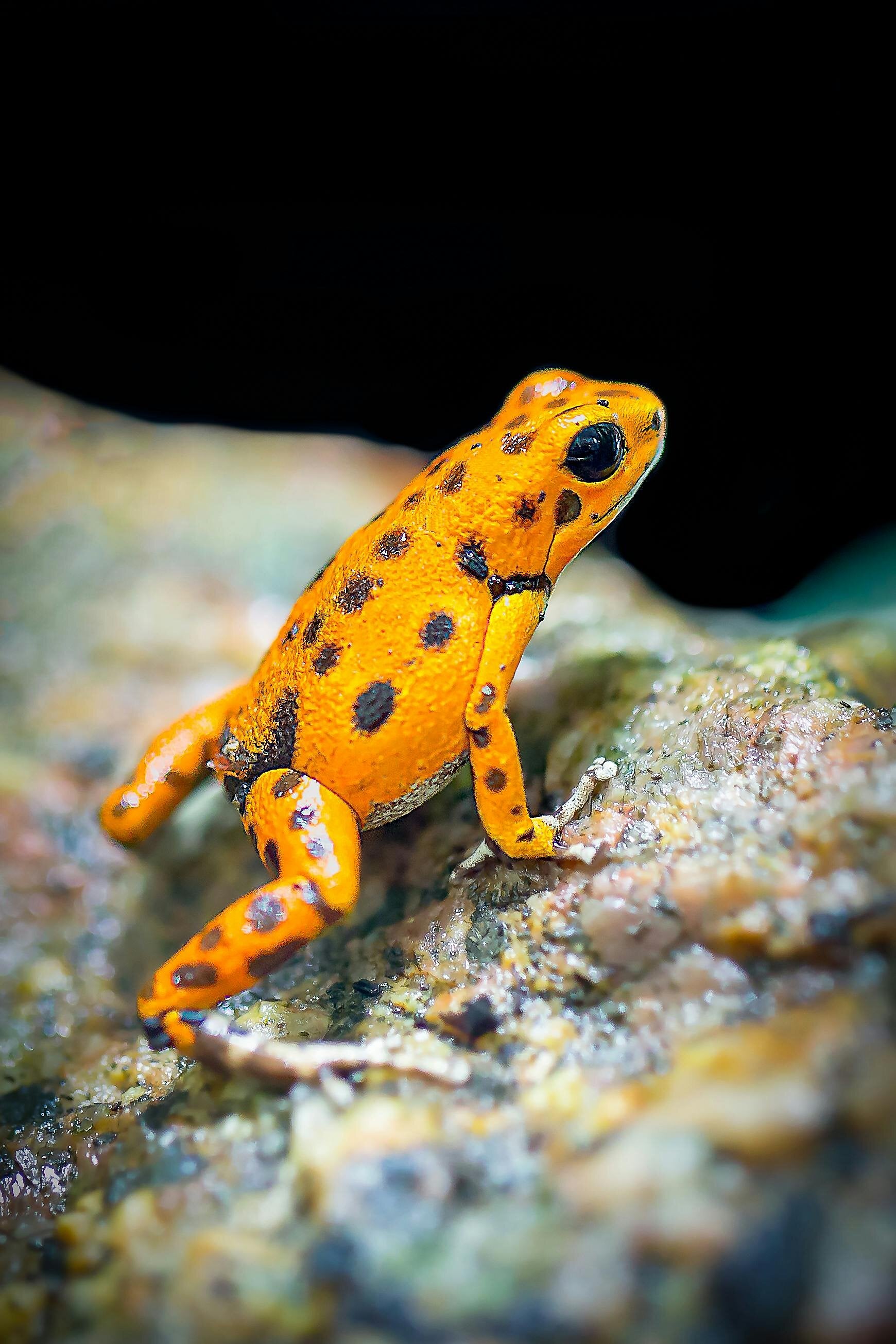
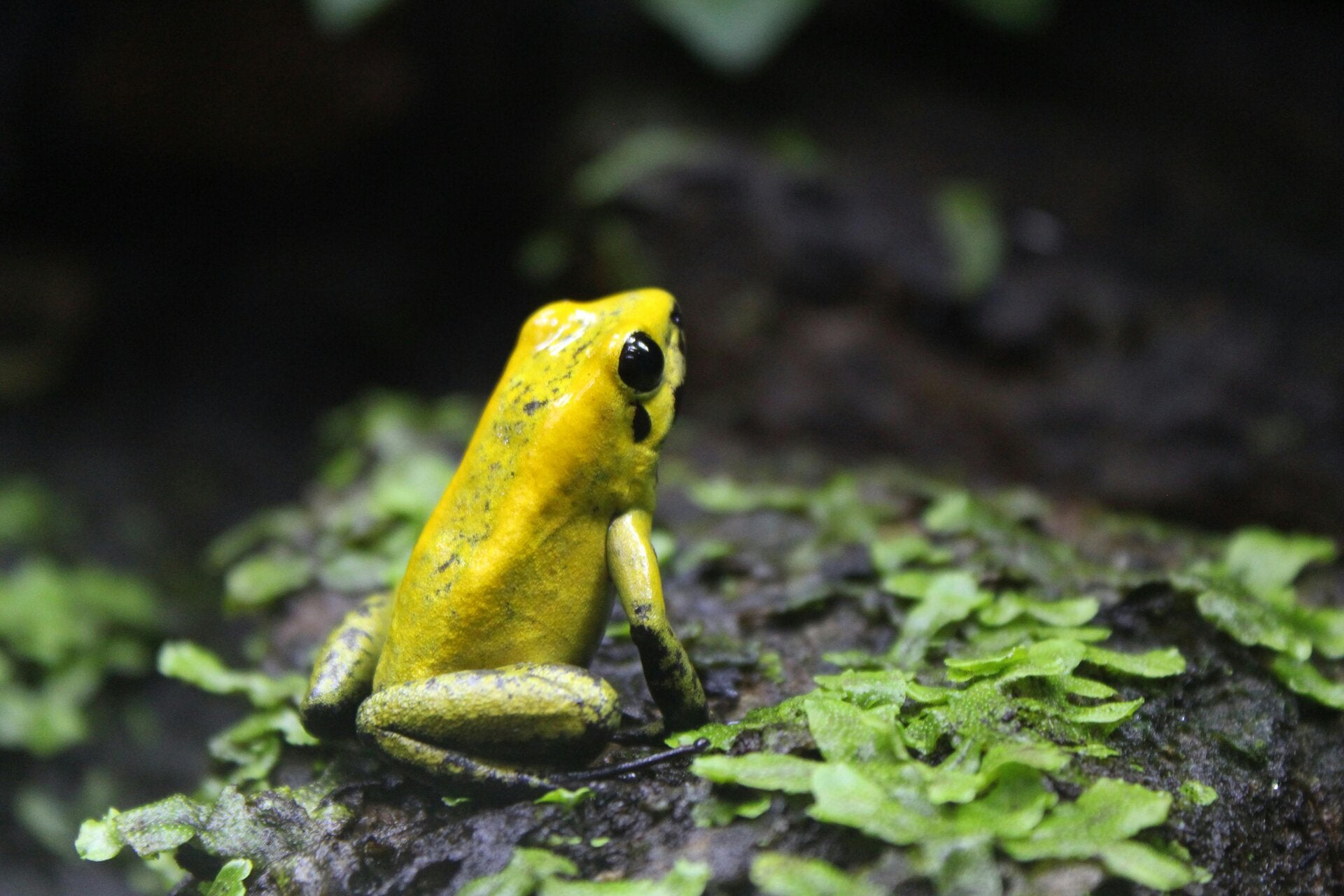
Golden poison frogs are small but robust, typically measuring 4.7 to 6 cm in length and weighing up to 30 grams, with females generally larger than males. Adults display vibrant aposematic colouration to warn predators, ranging from golden yellow to orange, mint green, or combinations of orange with black markings. Juveniles are initially black with two yellow stripes, with full adult colouration appearing around 18 weeks of age.
Diet and Toxicity
Golden poison frogs are insectivorous, feeding on ants,, termites, beetles, flies, and mites, which contribute to their potent skin toxin, batrachotoxin. This alkaloid disrupts nerve and muscle function, potentially causing paralysis, heart failure, and death. The average wild frog carries enough toxin to kill 10 to 20 humans or thousands of mice, though toxicity depends on diet and locality. In captivity, without access to toxic prey, frogs lose their toxicity. Their bright colouration serves as an effective deterrent to predators (aposematism), though some snakes like Leimadophis epinephelus show resistance and can prey on juveniles.
Habitat and conservation status
Endemic to a small region of the Pacific coast rainforest of Colombia, the Golden Poison Frog faces significant threats due to habitat destruction and illegal collection for the pet trade. Conservation efforts are crucial to protect this iconic species and its fragile ecosystem. Further research is needed to fully understand its population dynamics and the impact of environmental changes.

Further exploration
We hope this page has piqued your interest in the Golden Poison Frog. Continue your exploration by consulting the resources listed below. By learning more about this fascinating amphibian, we can contribute to its conservation and ensure its survival for generations to come.
Bonus frog joke!
Why did the frog call his insurance company? Because he'd been "toad" he was going to croak!
Activities about this particular frog:

Create Your Own Website With Webador